Aged Care Facility ● Embleton, WA
Regis Aged Care Embleton Extension
Designed by Matt Burleigh ● In collaboration with Oriol Design Studio
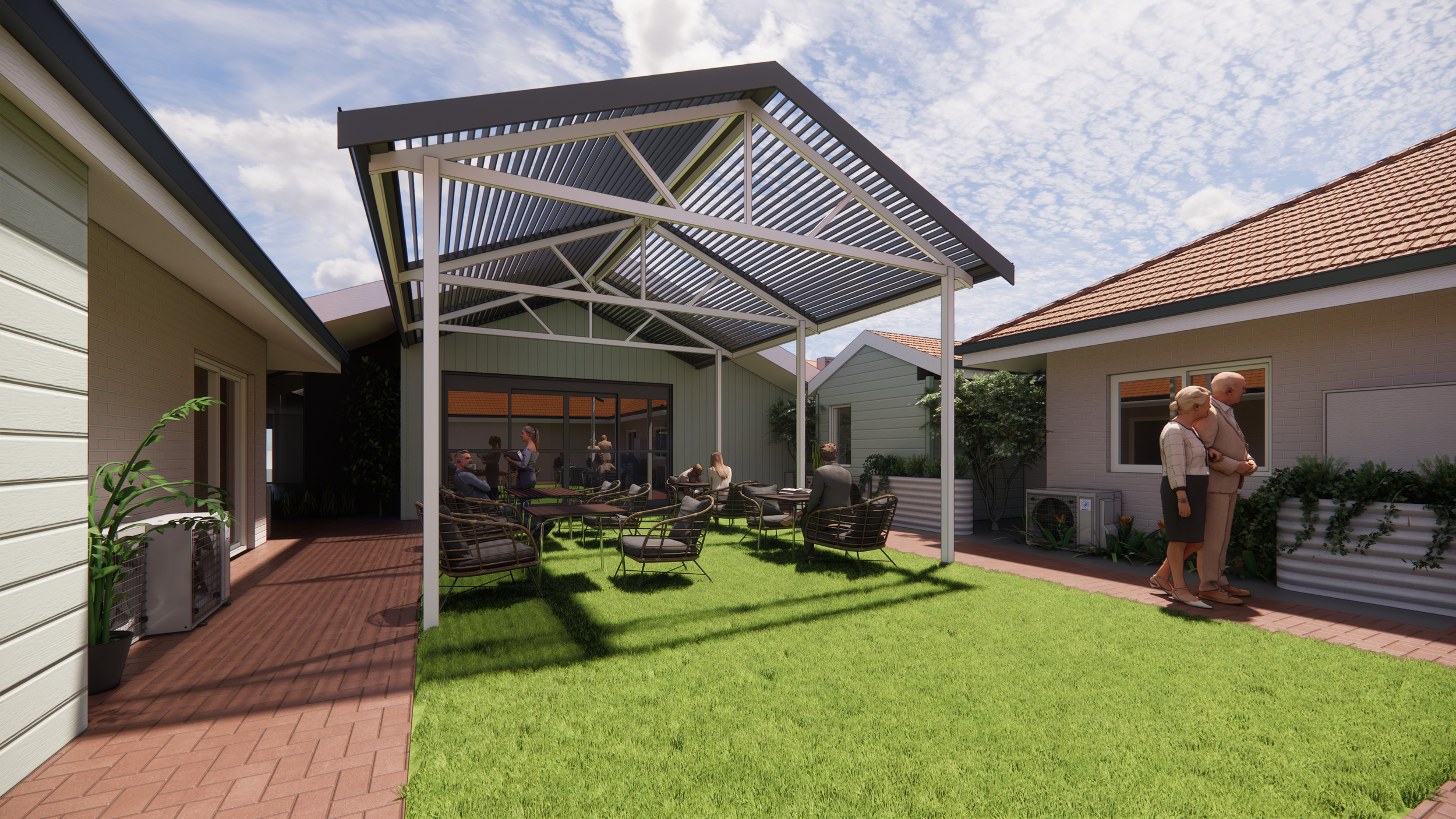
Regis Aged Care Embleton – Dining Extension is a proposed extension to the existing dining facilities, developed by Cynosure Architecture in collaboration with Oriol Design Studio. The design progressed to development application stage and focused on improving accessibility, spatial clarity, and comfort within an operational aged care environment.
Careful consideration was given to compartmentation, energy efficiency, and subtle materiality, supported by a detailed site measure-up and close client engagement. The project did not proceed beyond DA stage.
The design prioritised clarity and usability over visual excess, focusing on accessible circulation, clear spatial legibility, and calm, intuitive movement through the dining extension. Careful attention was given to scale, compartmentation, and material restraint to support comfort and ease of use for residents and staff.
The result was a considered proposal that supported informed client decision-making, clearly communicating intent and performance within the constraints of an operational aged care facility prior to the project pausing at DA stage.
A restrained material palette and carefully resolved building envelope informed the proposed extension, allowing it to sit comfortably within the existing aged care facility while prioritising durability, accessibility, and long-term performance. Subtle material articulation and controlled openings were used to support energy efficiency and ease of maintenance, rather than visual excess.
The envelope design reinforced comfort through spatial planning and environmental control, supporting a calm, functional dining environment appropriate to an operational aged care setting.
A clear and legible architectural language informed the proposed extension, with emphasis placed on the building envelope, internal volumes, and material expression as experienced by residents and staff. Light, structure, and surface were carefully considered to support orientation, accessibility, and ease of use, prioritising clarity and durability over visual excess.
Open sightlines and well-resolved circulation supported intuitive movement through the dining space, reinforcing a calm, functional environment appropriate to an operational aged care setting.