3D Visualisation ● Broome Airport
Broome Airport Visualisation
Designed by Lloyd Pickwell ● Visualised by Matt Burleigh
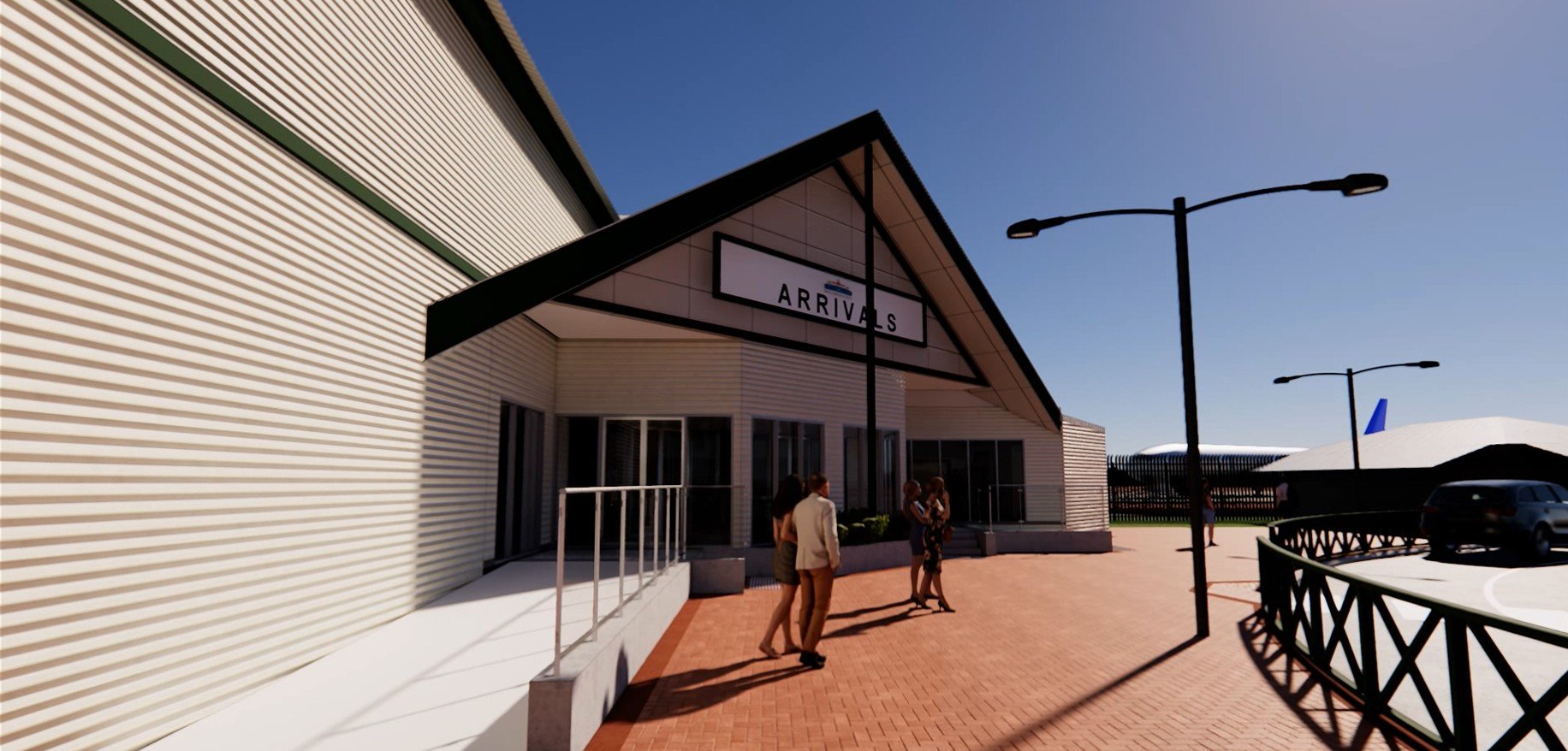
Broome Airport Arrivals Terminal Visualisation is a large-scale 3D walkthrough prepared by Cynosure Architecture to support stakeholder engagement for the proposed new arrivals terminal at Broome Airport. Completed in 2020, the visualisation translated the architectural design by Lloyd Pickwell Architects into an immersive digital environment, allowing key stakeholders to clearly understand spatial intent, passenger flow, and material character prior to committing to the final design. The work focused on accurately communicating arrival sequencing, internal volumes, and the overall passenger experience, supporting informed decision-making within a complex public infrastructure context..
The visualisation prioritised clarity over spectacle, focusing on accurate scale, spatial legibility, and passenger flow rather than visual embellishment. Key arrival moments were carefully framed to communicate volume, circulation, and material intent, allowing stakeholders to confidently assess the proposed design.
The result was a clear, immersive tool that supported informed decision-making, aligning stakeholders around a shared understanding of the architecture prior to design commitment.
A restrained material palette and carefully articulated building envelope define Tranquility House, grounding the project within the Witchcliffe Ecovillage while prioritising long-term performance. Lightweight cladding, deep reveals and integrated shading elements are combined to support passive solar control, durability and low maintenance, rather than visual excess. Openings are positioned to maximise northern light and cross-ventilation, reinforcing comfort through design rather than reliance on mechanical systems.
A clear and legible architectural language underpinned the visualisation, with particular emphasis on the building envelope, internal volumes, and material expression as experienced by arriving passengers. Structure, light, and surface were articulated to reinforce orientation and wayfinding, prioritising clarity and durability over visual excess.
Open sightlines and carefully framed perspectives were used to communicate spatial hierarchy and movement through the terminal, supporting an intuitive arrival sequence and a calm, functional passenger experience within a demanding public infrastructure setting.